Homeschool humanities
Education is not just about what your child knows.It is about who they become.
Romeschool is built around the person who eventually walks out the door: grounded in reality, able to think a hard question through, able to say what they mean, and able to make something useful.
A real lesson, start to finish — and 26 courses open theirs. No account, no card.
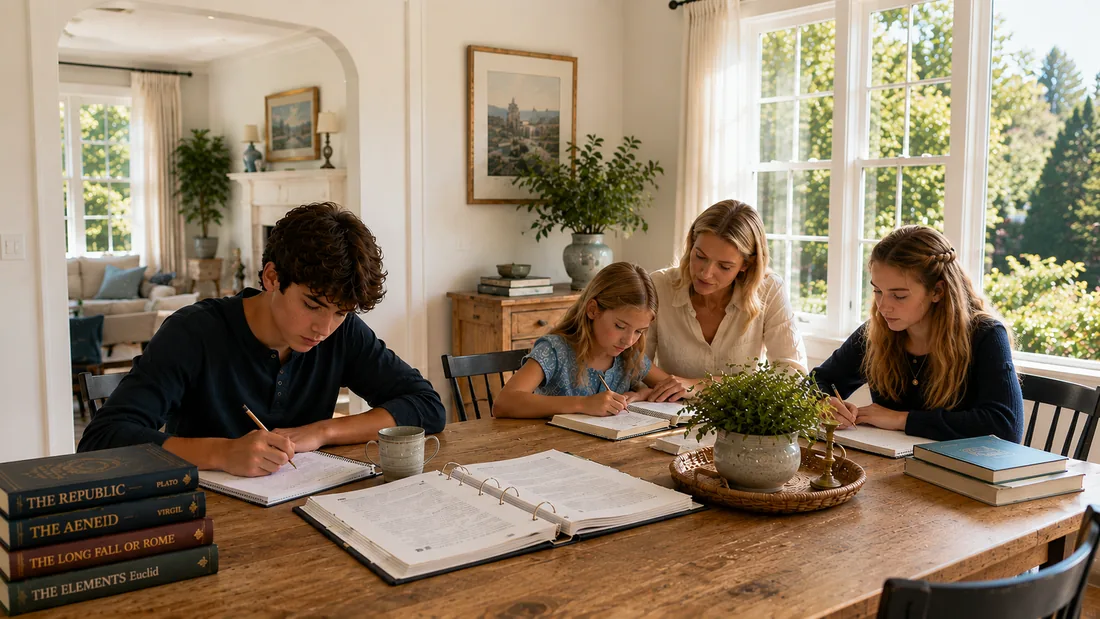
Why this exists
Built by a father thinking about his own children.
You get about eighteen years with a person, and the middle ones go faster than anyone warns you. I started building this because of what I wanted at the end of mine — not merely a transcript, but a young adult who could think a problem through, say what they mean, and make something worth having.
Schools measure what is easy to measure. Judgment isn’t. Knowing how the world actually works isn’t. Neither is being able to create something of value to another person. Those are the capacities I want my kids to carry out the door. They are what Romeschool is built to form.
Romeschool is the education I wish someone had handed me.
Doug Berry
Founder · Atheneum Academy
Information is everywhere.Wisdom is not.
Children can reach more information than any generation before them, instantly and for free. But access to information does not by itself produce understanding, judgment, or character.
A serious education has to do more than deliver material. It has to teach a student to look closely, understand what came before, weigh a claim against the evidence, say clearly what they have understood — and eventually do something useful with all of it.
Free, and instant
- Every fact
- Every summary
- Every answer
- A finished-looking essay, on request
Still not for sale
- Judgment
- The patience to read something long
- Knowing which sources to trust, and why
- The nerve to defend a position out loud
- The ability to make a thing that actually works
The second list is the whole reason a curriculum still has a job.
Formation and belief
Serious formation. No creed required.
Romeschool is neither a Christian curriculum nor a secular one. It teaches no denomination’s doctrine, requires no religious assent, and does not treat belief as a deficit.
Where religion belongs to the history or the argument, it is treated seriously. On the truth of religious claims, the curriculum tells you plainly that it abstains: those claims belong to the student and family, not to us.
Everywhere else, Romeschool argues first and judges plainly. Students meet serious positions at their strongest, see our conclusion with the reasoning shown, and may dissent with a defended case.
What this is trying to form
The work has three directions.
Compare it to anything you've ever done. You have been uncomfortable on a long flight — cramped legs, bad food, a crying baby three rows back. Now remove the seat. Remove the bathroom, the smooth ride, and the certainty of arrival. You are in a wooden box below the waterline of a ship, and it is slowly leaking. Your father has been working the pump for an hour, forcing the water back out of the hull. The ceiling is four feet high. You cannot stand up, and haven't been able to for a month.
Understand the world.
The present makes more sense when a student understands how it came to be.
History, literature, science, ideas, choices, and consequences are examined closely enough that the world stops being something merely asserted to the student. The goal is acquaintance with reality — what happened, what caused what, what it cost, and what followed.
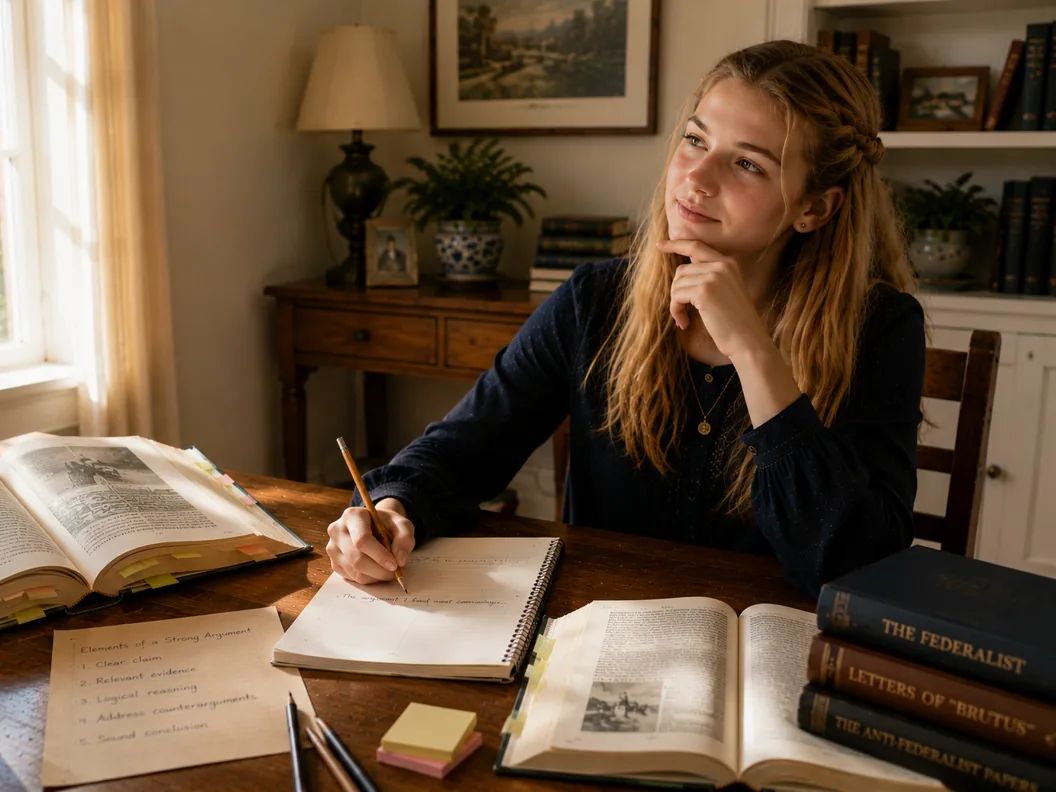
Judge for yourself.
A student should not merely inherit conclusions. They should learn how conclusions are reached.
Claims get weighed against evidence. Serious opposing positions are encountered at their strongest, not as caricatures. The student eventually has to decide what the evidence supports — and put that judgment into their own words.
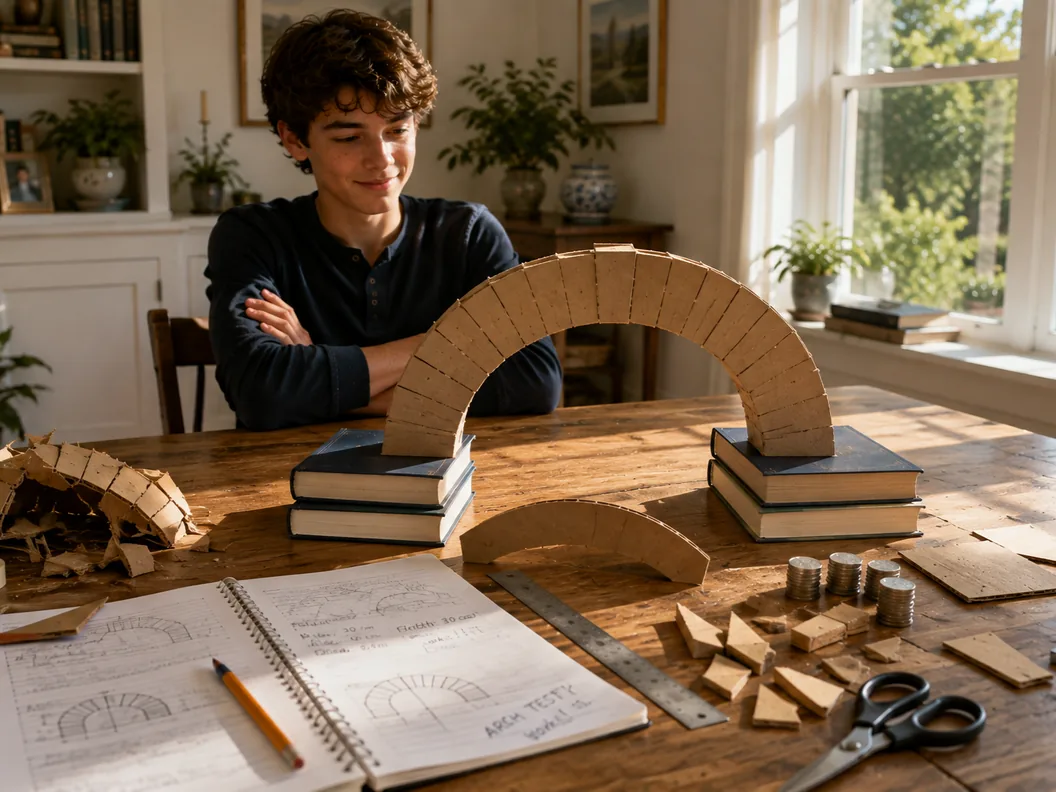
Become capable.
Knowledge matures when it becomes something a person can use.
Romeschool repeatedly turns outward: build it, test it, prove it, explain it, solve something, serve someone, make something another person has a use for. A student’s education should leave them more capable of acting in the real world, not merely more informed about it.
In a real house
Serious education can still fit around family life.
One course, one sitting: read the lesson, then do the work it sets. That runs about forty minutes; the hands-on courses, where the work is the experiment or the construction, run longer. What the closing work is depends on the course — and the course says so on the page, in the lesson itself.
- Read the lesson
- Then do the work it sets
- What the work is, and how long it takes, is printed on the page
- Unsettlers closes every lesson with twenty minutes in ink
- So do Know Thyself, Lives Worth Knowing and How Influence Works
- The length and the time are printed with the prompt
- History of Western Civilization: talk it through, don’t write it up
- The Examined Life closes the same way
- Demonstrandum builds it with compass and straightedge
- In Practical Science the experiment is the work
- Courses land Monday to Thursday
- Friday carries no new lesson
- Change the days if your week is shaped differently
- One course carries the speech — you name it for the term
- One question, carried through the month
- Recorded and transcribed on your own device
Once a month, the course you choose for the household speech sets one question. Your student carries it through the month — posing it, gathering the evidence, and drafting the case — then stands and delivers it to the household. It is the only ceremony in the month, and it is the one everybody remembers.
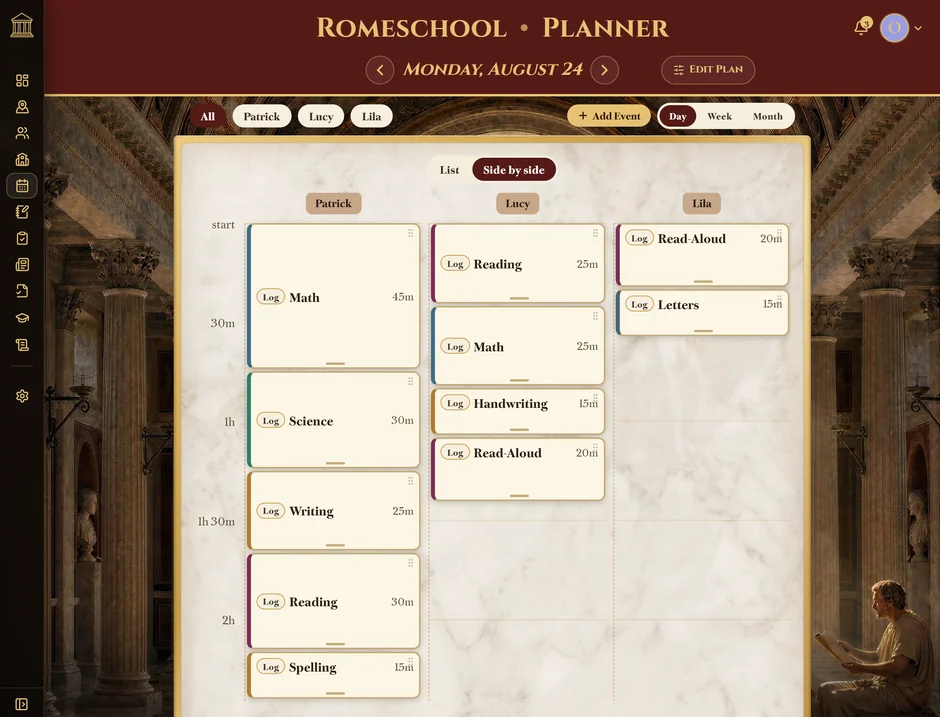
The planner lays that rhythm out for you, keeps the record as the work is done, and turns it into the hours and reports your state asks for. It is free for every family, whether or not you ever enroll in a course.
It already exists
Not a philosophy waiting to be built.
These are written courses with real lessons in them — read one before you decide anything. They run down five tracks, and a family can take a single course beside whatever else they already use, or hand the whole humanities side of the week over. Both are the product working as intended.
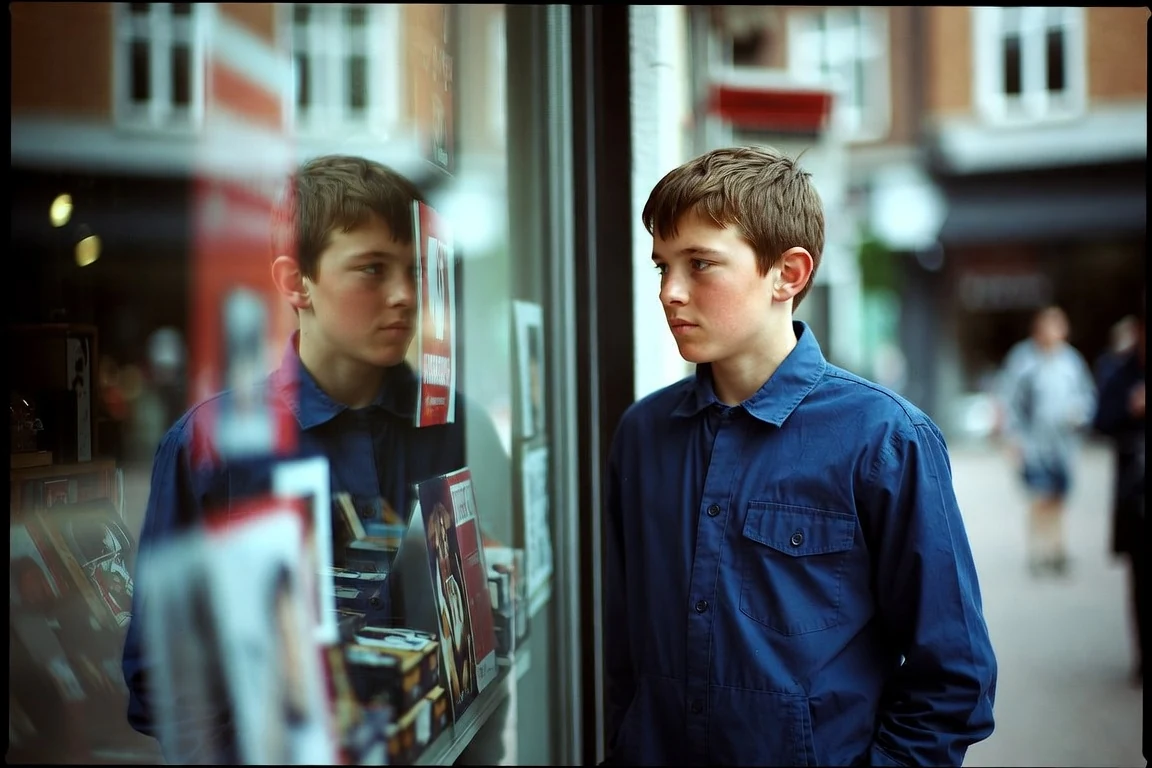 Know ThyselfWisdom & Character
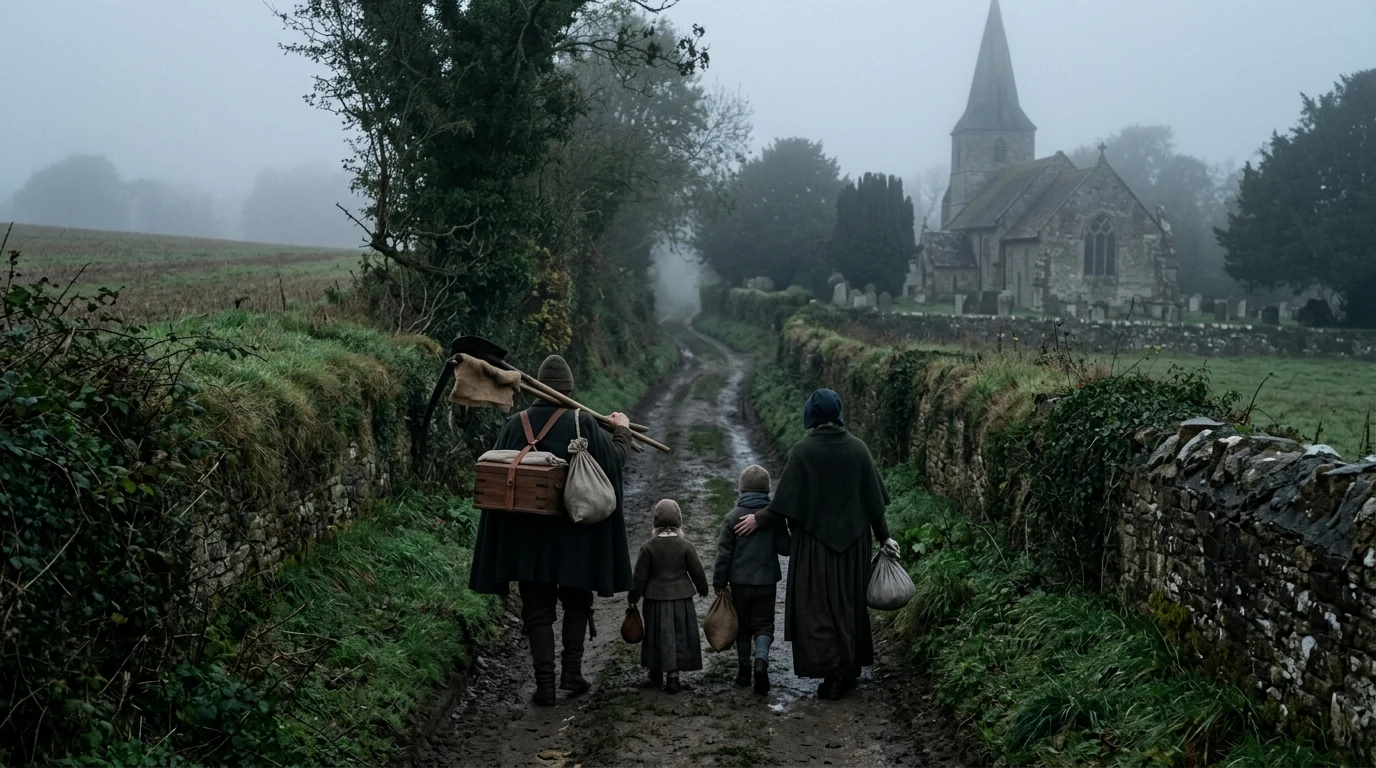 Unsettlers: An American HistoryThe Inheritance
 Ars LogicaLanguage & Voice
 Philosophy of the Good LifeThe Mind
 Practical ScienceThe Builder
 Proto-EngineeringThe Builder
Wisdom & Character
What a person is for — judgment, self-knowledge, and the weight of a choice.
Language & Voice
Reading closely, writing clearly, and saying it so that it lands.
The Mind
The long argument — philosophy, the great books, and telling a good case from a loud one.
The Inheritance
How the world we actually live in came to be, and what it cost to get here.
The Builder
Science, invention, and the work of making something other people can use.
Every course named here opens in full to enrolled families on September 1. Until then the opening lesson of each one is free to read — no account, no card.
Some of the architecture is old on purpose: encounter something worth knowing, understand it, judge it, and learn to put it back into your own words.
Free to read, right now
Read the first lesson of 26 courses.
Not an excerpt, not a syllabus, not a marketing page with a lesson-shaped hole in it — the lesson itself, the whole thing, exactly as an enrolled student reads it. No account, no card, nothing to cancel.
The catalog page lists all of them by track, each with its own opening lesson.
How we work
Built carefully. Improved constantly.
A published lesson is not a finished lesson.
Courses are re-read, corrected and re-cut after they ship. Shipping is a milestone, not a verdict.
Getting the facts right is the floor, not the pitch.
Where a claim turns out to be wrong, it is fixed — and the fix is not deferred to some future edition.
Clarity counts as correctness.
A lesson a student cannot follow has failed, however accurate it is. Prose that does not carry gets rewritten.
When a family writes in, the feedback reaches the person responsible for the course.
It is one hop, not a support queue. And because the courses are delivered digitally, a correction can be in front of students without waiting for a next edition.
Try Romeschool for 60 days. If it isn’t carrying its weight for your family, say so and we refund the purchase in full — no lesson limits, no forms, no explanation required.
What parents ask
The five questions we get first.
Is Romeschool religious?
It is neither a Christian curriculum nor a secular one. Romeschool teaches no denomination’s doctrine, requires no religious assent, and does not treat belief as a deficit. Where religion belongs to the history or argument, it is treated seriously. On religious truth claims, the curriculum states its abstention plainly.
Is this accredited?
No homeschool curriculum is. Accreditation is something schools earn, not coursework, and no state requires it of you. What holds up is evidence: a real course record, the hours actually logged, and a transcript a registrar can read. Romeschool produces all three as the work is done.
Is this political?
Every curriculum has a point of view; the question is whether it tells you what it is. Ours is that some things are true, some choices are better than others, and a student is owed our reasoning rather than our conclusions. So your student meets serious positions at their strongest — a caricature of the other side teaches nothing — and then gets our verdict, marked as ours, with the argument shown. We are not neutral and we do not pretend to be. A student who lands somewhere else and defends it with evidence has done the work, and is scored on the case, not on which way it fell.
What if my child is behind?
The courses run grades 6 through 12, and the progression is skill-based, not age-based. A sixth grader starts at the beginning with room to take the whole path; a twelfth grader starts where the work is and goes deep rather than wide. Progress is stamped as the work happens, so there is no falling behind — only where you are now.
Do I need to be a classical homeschooler?
No. You need to want your child to read hard books, write clearly and say what they mean. A course is about forty minutes a day, so one can sit beside whatever you already use, or you can hand the whole humanities side of the week over. Both are the product working as intended — and the planner is free either way, whether you ever enroll in a course or not.
You get one childhood to work with.
The point is not to race to the end of an education. It is to use the years while you have them — on the things that will still matter to your child at forty.
No card. The planner, logbook and records are free for every student — you just make an account.
Enrolling in courses? See the founding rate — with a full refund within 60 days